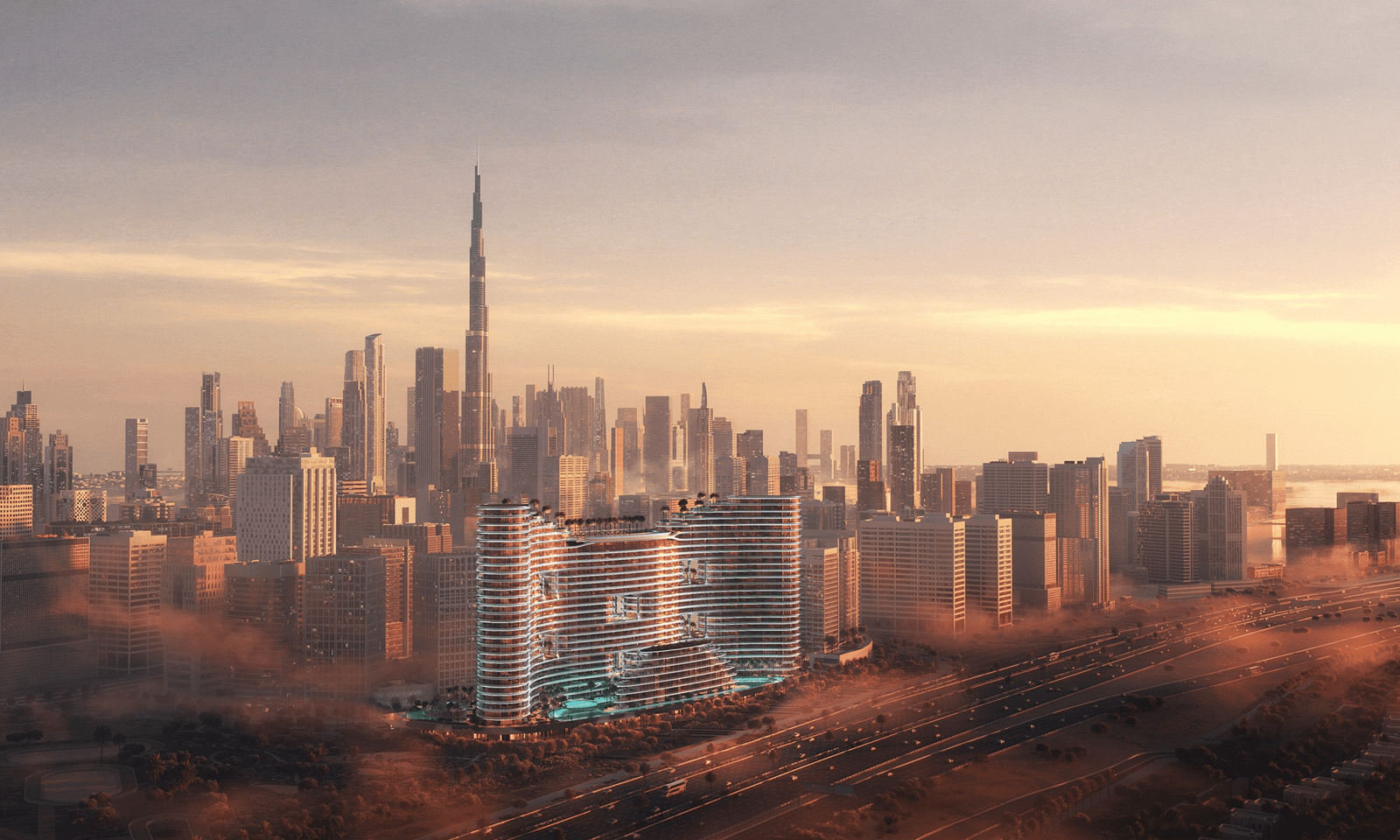
For years, the story of Dubai real estate has been simple: prices go up, demand keeps rising, and almost everything sells. In 2026, that story is changing — not collapsing, but maturing. And for buyers, investors, and agents alike, that shift might be the most interesting real estate story in the city right now.
A Record-Breaking Start to the Year
Dubai opened 2026 with numbers that would have seemed unthinkable a few years ago. In Q1 alone, the emirate recorded AED 252 billion in total real estate transactions — up 31% year-on-year — with total investment value reaching AED 173 billion across 57,744 individual transactions. Those figures alone confirm Dubai’s real estate market is still one of the most active in the world.
But the headline number isn’t the full picture. What’s changed in 2026 isn’t whether Dubai property is going up — it’s which property is going up, and why.
A Market That’s Growing Up
After several consecutive years of extraordinary price growth, increasing supply is finally creating a more balanced market. Rather than a uniform rise across every project and every neighborhood, 2026 has brought a more selective landscape:
- Residential is rebalancing, as more completed supply gives buyers real choice for the first time in years.
- Commercial, especially Grade A office space, is moving in the opposite direction — tightening as demand for quality space outpaces what’s available.
- The best assets — well-located, well-built, well-managed — continue to perform strongly, while overpriced or poorly positioned stock is facing genuine competition for the first time.
This isn’t a market cooling off. It’s a market where quality and positioning finally matter as much as timing.
The World Is Still Watching Dubai
If anyone doubted Dubai’s pull on global capital, September 2026 put that to rest. The 22nd edition of the International Property Show (IPS) opened at Dubai World Trade Centre from September 7–9, with more than 300 exhibitors and attendance projected above 30,000 — a 38% larger exhibition footprint than the previous year. The event brought together institutional investors, developers, banks, and proptech firms across five sectors: Real Estate, Future Cities, Startups & PropTech, Design, and Services.
The takeaway from the show floor was clear: despite regional uncertainty over the past year, Dubai’s real estate sector continues to be viewed internationally as a market defined by regulatory clarity, investor protection, and long-term resilience — qualities that matter more to serious capital than short-term headlines.
What This Means If You’re Buying or Investing
A maturing market changes the questions worth asking. It’s no longer enough to buy “in Dubai” — where, what, and from whom now carry real weight:
- Location and build quality separate winners from the rest. With more supply on the market, buyers can afford to be selective — and are.
- Off-market deals are increasingly common. Some of the strongest opportunities are moving before they ever reach public listings, which is where a well-connected agent makes the difference.
- September brings the city back to life. As the summer heat eases and residents return from travel, activity — viewings, negotiations, and closings — typically picks up sharply through the final quarter of the year.
The Bigger Picture
Dubai’s real estate market isn’t cooling — it’s growing up. A city that spent years proving it could attract global capital at scale is now proving something arguably more important: that it can sustain that momentum through a more sophisticated, selective, and transparent market. For buyers willing to do their homework, that’s not a warning sign. It’s an opportunity.
Data referenced: Dubai Land Department Q1 2026 transaction figures; International Property Show (IPS) 2026, Dubai World Trade Centre.